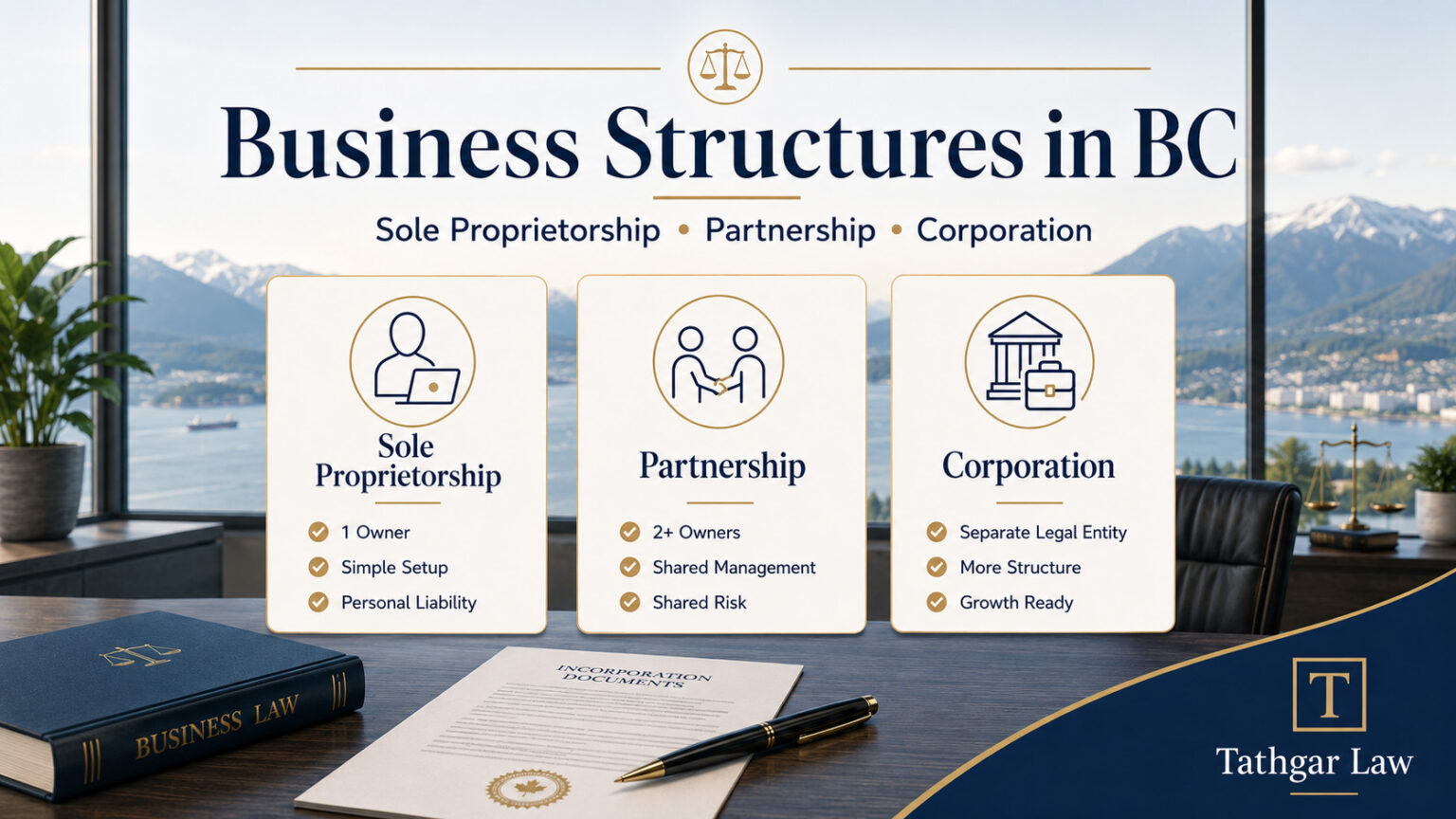
Starting a business is an exciting venture, and one of the key decisions is whether to incorporate. Incorporating in BC comes with several advantages and disadvantages that should be carefully considered before you make the switch from a sole proprietorship or partnership to a corporation.
TL;DR: Incorporating in BC gives you limited liability protection, potential tax advantages, and added credibility, but it also comes with setup costs, ongoing paperwork, and reduced personal control. For most growing businesses, the benefits outweigh the costs, but it depends on your revenue, risk level, and long-term plans.
The Pros of Incorporating in BC
1. Limited Liability
One of the biggest benefits of incorporating in BC is limited liability. As a corporation, personal assets are generally protected from business debts and liabilities. This means that creditors can only pursue the assets of the business, not personal assets like a home or personal savings.
2. Tax Advantages
Incorporating can offer significant tax benefits. Corporations are taxed separately from their owners, and in many cases, the corporate tax rate in BC is lower than the personal income tax rate. Additionally, corporations can take advantage of various tax deductions and credits that are not available to sole proprietorships or partnerships.
3. Credibility and Access to Capital
Being a corporation can enhance a business’s credibility with customers, suppliers, and investors. It signals that the business is serious and established. Furthermore, corporations often find it easier to raise capital through the sale of shares, which can be a major advantage for growth and expansion.
4. Perpetual Existence
A corporation has perpetual existence, meaning it continues to exist even if the owner dies or sells their shares. This can provide continuity and stability for the business, making it easier to plan for the long term.
5. Flexibility in Income Management
Incorporation allows for more flexibility in managing income. For example, choosing to take a salary or dividends can be beneficial for tax planning and personal financial management.
The Cons of Incorporating in BC
1. Cost
Incorporating a business in BC involves various costs, including initial incorporation fees, annual filing fees, and potential legal and accounting fees. These costs can be a burden, especially for small businesses or startups with limited capital.
2. Complexity and Paperwork
Running a corporation comes with more regulatory requirements and paperwork compared to a sole proprietorship or partnership. This includes maintaining corporate records, holding annual meetings, and filing annual reports with the BC Registry. Managing these requirements can be time-consuming and may require professional assistance.
3. Reduced Personal Control
As a corporation grows, the original owner may need to share control with other shareholders or a board of directors. This can lead to a loss of personal control over business decisions, which may not suit every entrepreneur.
4. Disclosure Requirements
Corporations are required to disclose certain information to the public, including financial statements and details about directors and officers. This level of transparency might not be desirable for all business owners.
When Incorporating in BC Makes Sense
Incorporating in BC is not the right choice for every business, but it makes the most sense when:
- Your business generates enough revenue that the lower corporate tax rate outweighs the cost of maintaining a corporation.
- You have personal assets you want to protect from business liabilities, such as a home or savings.
- You plan to bring in investors or shareholders, or you want to sell shares in the business.
- You want the business to continue operating beyond your own involvement, whether through succession or sale.
If you are still deciding whether a corporation is the right structure, you can also read our guide to choosing the right business structure in BC or our step-by-step guide to incorporating a business in Canada for a detailed walkthrough of the process.
Conclusion
Incorporating in BC has its pros and cons. While it offers benefits like limited liability, tax advantages, and increased credibility, it also comes with costs, complexity, and potential loss of control. The right decision depends on your business size, risk profile, and long-term goals.
For personalized advice and a deeper understanding of how incorporation could impact your business, contact business and corporate lawyer Sunny Tathgar for a free consultation. Sunny has extensive experience in helping entrepreneurs navigate the complexities of incorporating in BC and can provide valuable guidance tailored to your specific needs.
You can also learn more about business and corporate law services in Victoria BC or get in touch with Sunny today to take the next step towards securing your business’s future.