A profitable business can look like a safe bet.
The customers are there. The lease is signed. The staff know what they are doing. The website is running. The seller may even describe it as “turnkey.”
But a business can be profitable and still be legally messy.
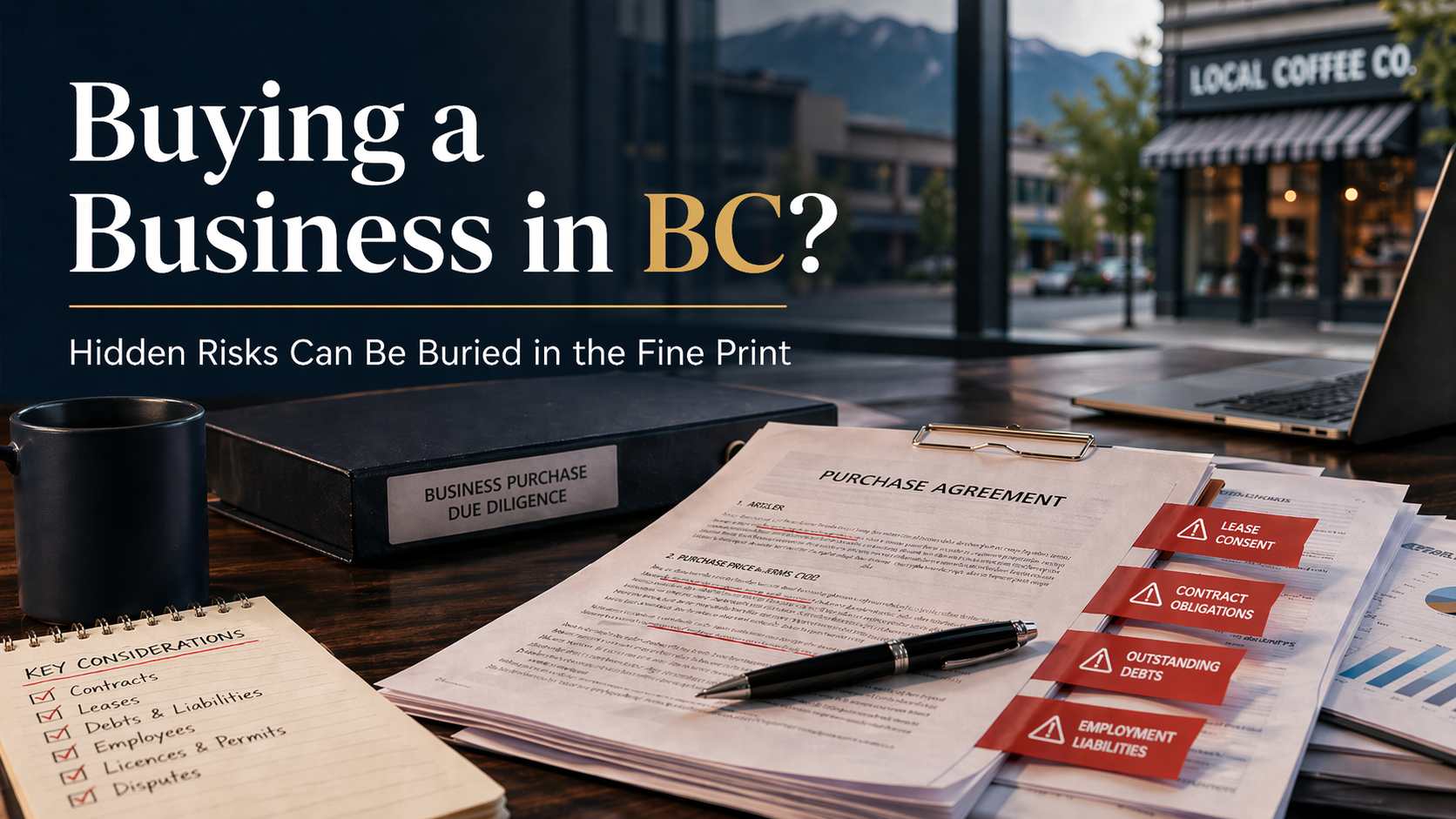
Hidden debts, lease problems, employee claims, supplier disputes, tax issues, and contracts that cannot be transferred can turn a promising purchase into an expensive problem. Before buying a business in BC, the fine print matters as much as the asking price.
A Profitable Business Can Still Hide Serious Problems
When someone buys an existing business, they are not just buying revenue, equipment, goodwill, or a customer list. Depending on how the purchase is structured, the buyer may also be taking on legal obligations tied to the business.
Some risks are easy to see. Others are buried in documents the buyer may not review closely enough before signing.
Due diligence is the process of looking closely at a business before the purchase is completed. BDC describes due diligence as one of the main ways a buyer can protect themselves from potential liabilities when buying a business.
For a buyer in BC, due diligence may include a review of contracts, leases, employment records, corporate records, debt, tax issues, licences, permits, and any pending disputes.
The goal is simple: find the problems before they become the buyer’s problems.
A Share Purchase Can Mean Buying the Past Too
One of the first legal questions in a business purchase is whether the buyer is purchasing assets or shares.
In an asset purchase, the buyer usually purchases selected assets of the business. This may include equipment, inventory, intellectual property, customer lists, goodwill, contracts, or a business name. The buyer may be able to choose which assets and obligations are included.
In a share purchase, the buyer purchases the shares of the company that owns the business. The company continues to exist, but ownership changes hands.
That can be appealing because contracts, licences, permits, and relationships may stay with the company. The risk is that the buyer may also inherit the company’s past, including debts, tax issues, employment claims, lawsuits, contract breaches, and other liabilities.
Canadian businesses can be acquired through a share purchase, asset purchase, amalgamation, plan of arrangement, or takeover bid, with the structure affecting the legal and regulatory issues involved.
The structure should not be treated as a small detail. It can change the risk profile of the entire deal.
The Lease May Be the Real Dealbreaker
For many businesses, the lease is one of the most valuable parts of the deal.
A café, clinic, salon, retail shop, or service business may depend heavily on its location. The buyer may assume they can simply take over the space after closing. That is not always true.
A commercial lease may require the landlord’s consent before it can be assigned. It may include restrictions on how the space can be used. It may contain relocation rights, demolition clauses, personal guarantees, renovation limits, renewal deadlines, rent increases, or operating costs that affect the buyer’s future plans.
A business may look profitable today, but if the lease cannot be transferred or renewed on reasonable terms, the value of the business may drop quickly.
Before signing, a buyer should know:
- Whether the lease can be assigned
- Whether landlord consent is required
- How long remains on the lease
- Whether there are renewal options
- What extra rent or operating costs may apply
- Whether a personal guarantee is required
- Whether the current business use is allowed
The business may be the thing being sold, but the lease may be the thing that keeps it alive.
The Best Customer Contract May Not Come With the Sale
A business may rely on customer contracts, supplier agreements, franchise agreements, software licences, maintenance contracts, equipment leases, distribution agreements, or service arrangements.
A buyer should not assume those contracts will automatically continue after closing.
Some contracts include assignment clauses. These clauses may say the contract cannot be transferred without consent from the other party. Others may allow the other party to terminate the contract if ownership changes.
This can be a serious issue if the business depends on a few major customers or a key supplier.
Before buying, a purchaser should review:
- Customer agreements
- Supplier contracts
- Franchise or licensing agreements
- Equipment leases
- Financing agreements
- Website, software, and subscription contracts
- Service and maintenance agreements
A business may be worth much less if its most valuable contracts do not actually transfer to the buyer.
Employees Are Not Just Part of the Package
Employees can be one of the biggest hidden legal issues in a business purchase.
A buyer may want to keep the team in place, but employment obligations need to be reviewed carefully. There may be issues involving termination, severance, accrued vacation, unpaid overtime, benefits, workplace complaints, employment standards compliance, or contractor classification.
If the buyer plans to keep some workers but not others, that should be handled with care. If the buyer plans to change wages, hours, roles, benefits, or reporting structures, those changes may also create legal risk.
A buyer should review:
- Employment agreements
- Contractor agreements
- Payroll records
- Vacation and overtime records
- Benefits plans
- Workplace policies
- Pending complaints or claims
- Worker classification issues
A business purchase is not only a deal between buyer and seller. It can also affect the people who work there.
Hidden Debts Can Survive the Handshake
A seller may disclose the obvious debts, but other liabilities can be harder to spot.
There may be unpaid supplier invoices, tax balances, employee claims, customer refunds, warranty obligations, lawsuits, secured creditors, unpaid rent, or regulatory issues. If the purchase is structured as a share purchase, these risks can become even more serious because the company continues after the sale.
Public registry searches may reveal some concerns. Accounting and tax review may reveal others. A legal review may uncover contract and corporate risks that are easy to miss.
Recent Canadian acquisition guidance continues to place legal due diligence at the centre of a business purchase, including review of corporate records, contracts, employment matters, intellectual property, litigation, regulatory compliance, and real property.
A buyer should know what they are taking on before closing, not after.
Messy Corporate Records Can Signal Bigger Problems
If the business is a corporation, its records matter.
A buyer may need to review the minute book, share records, director and shareholder resolutions, annual reports, registered office records, and corporate filings. Poor records can delay closing, create uncertainty about ownership, or raise concerns about whether past decisions were properly authorized.
This is especially relevant as BC continues moving companies into the modernized BC Business Registry. As of March 25, 2026, more than 10,000 companies were using the modernized BC Business Registry, with BC companies being moved over in phases. The BC government has also stated that BC Registry and BC OnLine applications are being modernized and replaced with the new BC Registry application.
For buyers, current and accurate corporate records can make the transaction cleaner. Disorganized records can raise questions that need answers before closing.
The Purchase Agreement Is Where the Risk Gets Real
A business purchase agreement should do more than name the price.
It should reflect the structure of the deal, the risks found during due diligence, and the responsibilities of both parties before and after closing.
A strong agreement may address:
- What assets or shares are being purchased
- What is excluded from the sale
- Purchase price and payment timing
- Deposits and holdbacks
- Conditions before closing
- Seller representations and warranties
- Indemnities if problems arise later
- Employee matters
- Lease assignment
- Required third-party consents
- Training or transition support
- Non-competition or non-solicitation terms where appropriate
- Closing documents
The agreement should match the transaction. A generic template may miss the very risks that make the deal dangerous.
Due Diligence Can Change the Deal
Due diligence does not always mean the buyer walks away.
Sometimes due diligence confirms that the business is worth buying. Sometimes it leads to a lower purchase price, stronger contract terms, a seller holdback, extra warranties, or a different purchase structure.
In some cases, due diligence shows that the deal is not worth the risk.
That is not a failure. That is the point.
A buyer should not be afraid to ask hard questions before signing. The answers may save them from inheriting years of legal, financial, and operational problems.
Buying a Business in BC? Get Legal Advice Before You Sign
Legal advice is most useful before the buyer is locked into the wrong terms.
A lawyer can help review the structure of the deal, identify legal risks, draft or review the letter of intent, support due diligence, review leases and contracts, and prepare or negotiate the purchase agreement.
For buyers and sellers in Victoria and across BC, early legal guidance can help reduce the risk of costly surprises after closing.
For support with business purchases, contracts, leases, and corporate transactions, learn more about Sunny Tathgar’s corporate legal services for BC businesses.
FAQs About Buying a Business in BC
What is the biggest legal risk when buying a business in BC?
One of the biggest risks is taking on obligations the buyer did not fully understand before closing. These may include lease obligations, unpaid debts, tax issues, employee claims, supplier disputes, or contract restrictions.
Is it better to buy assets or shares of a business?
It depends on the business, the buyer’s goals, tax advice, and the risks found during due diligence. An asset purchase may allow the buyer to choose specific assets and reduce some historical risk. A share purchase may preserve business continuity, but it may also carry more exposure to past liabilities.
Can a commercial lease be transferred when buying a business?
Not always. Many commercial leases require landlord consent before assignment. A buyer should review the lease before signing a purchase agreement, especially if the location is central to the value of the business.
What documents should be reviewed before buying a business?
A buyer should review financial records, contracts, leases, employment documents, corporate records, tax filings, licences, permits, insurance policies, equipment lists, debt records, and any known disputes or claims.
Do employees automatically stay with the business after a sale?
Not always. The answer depends on the structure of the transaction and the terms offered to employees. Employment issues should be reviewed carefully before closing.
When should a buyer contact a business lawyer?
A buyer should contact a lawyer before signing a letter of intent or purchase agreement. Early advice can help identify risks, protect the buyer during due diligence, and reduce the chance of signing terms that are difficult to change later.
Speak With a Victoria Business Lawyer Before You Sign
A business purchase should not come with surprises after closing. Before signing a letter of intent or purchase agreement, contact Sunny Tathgar for legal advice on business purchases, contracts, leases, and corporate risk.